
8 Superfoods That Actually Matter During Menopause

Your body at 40, 50, 60 and beyond is not the same as your body at 30.
And that's not because you're doing something wrong. It's because your hormones have changed.
When estrogen declines, everything shifts. Metabolism slows down. Fat storage moves to your midsection. Insulin sensitivity drops. Inflammation increases. Bone density decreases.
This isn't about going on another diet. It's about understanding what your body actually needs right now and giving it the tools to thrive during this transition instead of just survive it.
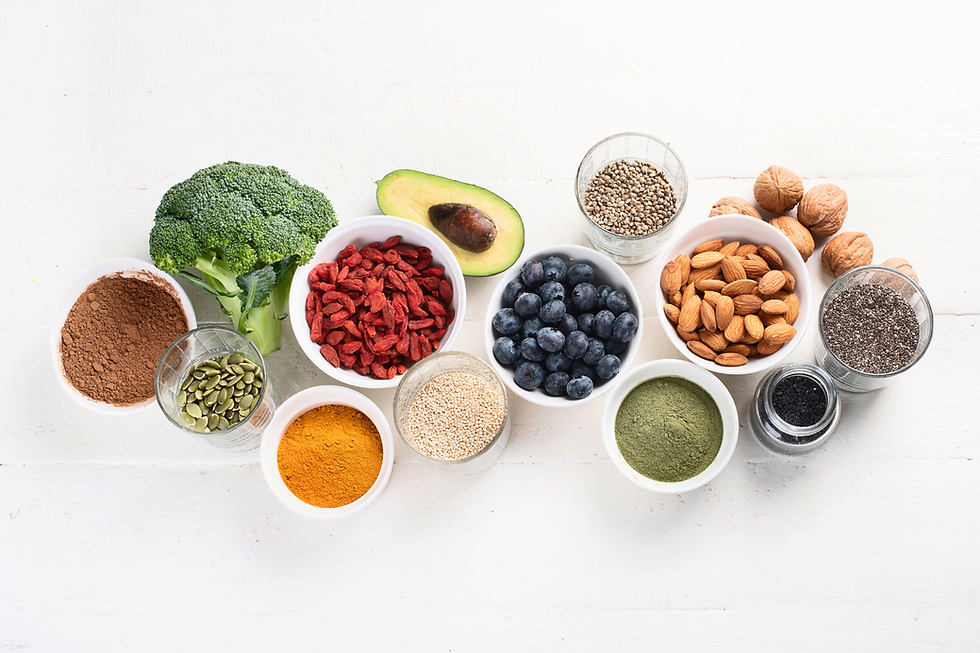
The 8 Superfoods That Support Your Body Through Menopause
1. Phytoestrogen-Rich Foods
When your estrogen tanks, your body freaks out. Hot flashes. Night sweats. Mood swings that make you want to throw things.
Phytoestrogens are plant compounds that act like a gentle, natural form of estrogen in your body. They won't replace what you've lost, but they can take the edge off.
Eat more ground flaxseeds (not whole, your body can't break them down), organic soy like edamame and tempeh, legumes, and sesame seeds.
Studies show that just 1-2 tablespoons of ground flaxseed daily can reduce hot flash frequency. It's not magic, it's lignans, which are natural compounds that help your body manage hormonal shifts.
2. Omega-3 Fatty Acids
If you're dealing with joint pain, brain fog, mood swings, or just feel like your body is constantly inflamed (because it probably is), omega-3s are non-negotiable.
Low-grade inflammation ramps up during menopause. Omega-3s are one of the most powerful anti-inflammatory tools you have.
Load up on fatty fish like salmon and sardines, walnuts, chia seeds, or algae-based omega-3 supplements if you don't eat fish.
Omega-3s also protect your heart and brain, both of which become more vulnerable after menopause. This is about long-term protection, not just symptom relief.
3. Calcium and Vitamin D-Rich Foods
Here's the truth: women can lose up to 20% of their bone density in the first 5-7 years after menopause. Twenty percent. That's not a small number.
Estrogen protects your bones. When it drops, bone loss accelerates. Calcium and vitamin D work together to slow that process down.
Fill your plate with leafy greens like kale and collard greens, dairy or fortified plant-based milk if you tolerate it, sardines with bones (yes, really, they're calcium powerhouses), eggs (the vitamin D is in the yolk, so don't skip it), and mushrooms exposed to sunlight.
You can't out-supplement a terrible diet. Food-first always wins.
4. Cruciferous Vegetables
Your liver is responsible for breaking down and eliminating excess estrogen. In perimenopause, when estrogen is spiking all over the place, this becomes really important.
Cruciferous veggies contain compounds like sulforaphane and indole-3-carbinol that support your liver's detox pathways and help your body metabolize estrogen more efficiently.
Eat broccoli, cauliflower, Brussels sprouts, cabbage, and kale. If you're dealing with heavy periods, PMS on steroids, or estrogen dominance symptoms in perimenopause, these vegetables are your best friend.
5. High-Quality Protein
After menopause, you start losing muscle mass faster. And muscle equals metabolism.
Less muscle equals slower metabolism equals harder to maintain a healthy weight.
Protein is also what keeps your blood sugar stable, reduces cravings, and keeps you full. It's not optional.
Eat wild-caught fish, pasture-raised eggs, grass-fed beef or bison, organic chicken, Greek yogurt, legumes and lentils, and quinoa.
You need MORE protein after 40, not less. Aim for at least 25-30 grams per meal to maintain muscle mass and keep your metabolism functioning.
6. Magnesium-Rich Foods
Magnesium is the unsung hero of menopause. It helps you sleep. It calms anxiety. It reduces muscle cramps. It regulates blood sugar. And most women are deficient in it.
If you're waking up at 3am, feeling wired and tired, or dealing with constant muscle tension, magnesium could be the missing piece.
Eat dark leafy greens like spinach and Swiss chard, pumpkin seeds, almonds, dark chocolate (70%+ cacao, you're welcome), avocado, and black beans.
Magnesium before bed can be a total game-changer for sleep. Seriously. Try it.
7. Fiber-Rich Foods
Your gut is where your body eliminates excess hormones. If your gut isn't functioning well (hello, constipation), those hormones get reabsorbed back into your system. Not great.
Fiber also keeps your blood sugar stable, helps you feel full, and supports a healthy weight, all of which become harder in menopause.
Berries like blueberries and raspberries, chia seeds and flaxseeds, oats, lentils and beans, and non-starchy vegetables are all great sources.
Poor gut health equals poor hormone balance. It's that simple. Aim for 25-40 grams per day.
8. Antioxidant-Rich Foods
Oxidative stress (basically, cellular damage) increases during menopause. It contributes to inflammation, aging, and chronic disease risk.
Antioxidants are your defense system. The more you eat, the better.
Berries (especially blueberries), dark leafy greens, green tea, turmeric, dark chocolate, colorful veggies like bell peppers, beets, carrots, and sweet potatoes are anti-oxidant rich food sources.
Eat the rainbow. The more colour on your plate, the more antioxidants you're getting. Simple.
The Bottom Line
Menopause nutrition isn't about being perfect. It's about understanding what supports your body right now and making choices that work with your hormones, not against them.
You don't need to overhaul everything overnight. But adding more of these superfoods into your daily routine can have a massive impact on how you feel.
Start with one thing. See what changes.
Your body isn't broken. It's just asking for different support.
Want to go deeper?
This power list is just scratching the surface. If you're ready to stop spinning your wheels with generic advice that doesn't work for your changing body, let's talk about what's actually going on with your hormones and metabolism.
I work with women just like you to create a personalized roadmap that addresses your specific symptoms, hormonal patterns, and goals. No more guessing. No more trying random things and hoping they work.
Ready to figure out what YOUR body needs right now? Book a free Menopause Body Reset Strategy Session with me, and let's create a plan that actually works for you.


Comments